
5Ds of Digital Marketing: A Simple Guide for Beginners
……………………………………………………………………………………………………………………………………………………………………………………………………………………………………………
August 25,2026 | by Digipanel
………………………………………………………………………………………………………………………………………………………………………………………………………………………………………….
INTRODUCTION
Digital marketing is no longer limited to having a website or posting on social media. Businesses interact with customers through smartphones, search engines, social media platforms, email, online advertising, apps, and other digital channels. To understand these interactions and manage them effectively, Dave Chaffey introduced the 5Ds of digital marketing: Digital Devices, Digital Platforms, Digital Media, Digital Data, and Digital Technology.
The 5Ds of digital marketing provide a simple framework for understanding how customers interact with a business online and how marketers can use digital resources to achieve better results.
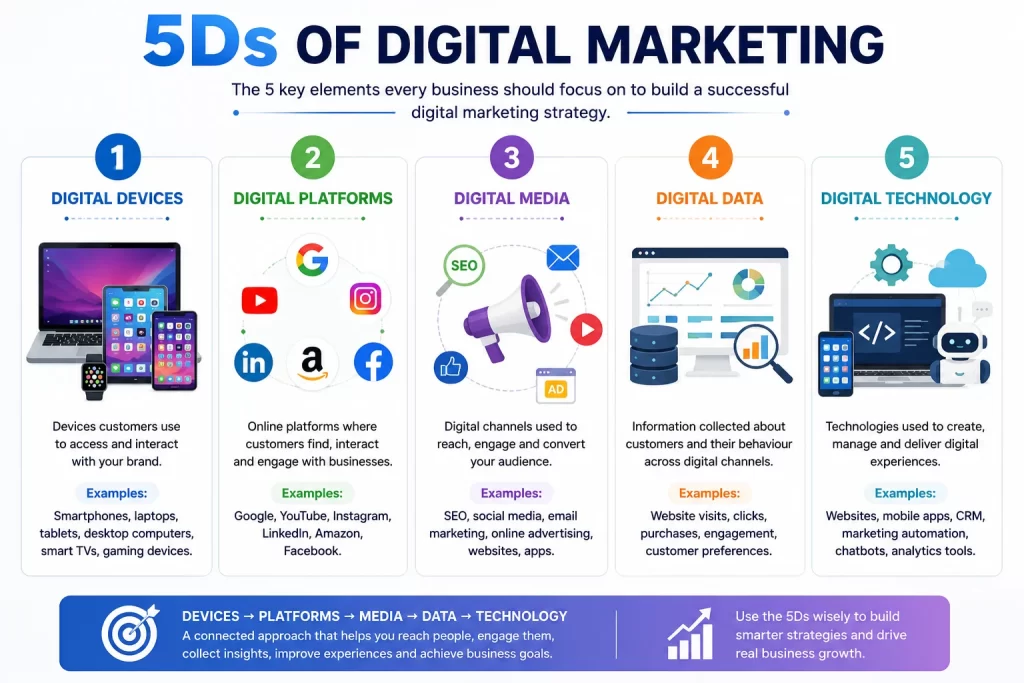
What Are the 5Ds of Digital Marketing?
The 5Ds are:
- Digital Devices
- Digital Platforms
- Digital Media
- Digital Data
- Digital Technology
Let’s understand each one in simple terms.
1. Digital Devices
Digital devices are the devices customers use to access and interact with a brand online. These include smartphones, laptops, desktop computers, tablets, smart TVs, gaming devices, and other connected devices.
For example :- a customer may discover a business through Google on a smartphone and later visit its website using a laptop.
For marketers, this means websites and digital experiences should work smoothly across different screen sizes and devices. A mobile-friendly website is particularly important because smartphones are a major part of online customer interactions.
2. Digital Platforms
Digital platforms are the websites, search engines, social networks, marketplaces, and apps where customers interact with businesses.
Examples include ;- Google, YouTube, Instagram, LinkedIn, Amazon, Facebook, and other major online services.
For example :- a clothing brand may use Google to attract search traffic, Instagram to showcase products, and Amazon to generate online sales.
The key is not to be present on every platform. Businesses should identify where their target customers spend time and focus their marketing efforts there.
3. Digital Media
Digital media refers to the online communication channels businesses use to reach, engage, and convert their audiences. These include search engines, social media, email, online advertising, websites, apps, and messaging channels.
Digital media can include paid, owned, and earned media.
For example- SEO can help a business gain organic search visibility, while Google Ads can provide paid visibility. Social media content and email marketing can then help nurture potential customers.
Using the right combination of digital media can help businesses improve reach, engagement, leads, and conversions.
4. Digital Data
Digital data is the information businesses collect about their audiences and their interactions with the brand. This can include website visits, clicks, purchases, customer preferences, engagement, and other behavioural information.
For example;- a business can analyse which website pages receive the most visits and which marketing campaigns generate the most leads.
This information helps marketers make better decisions. Instead of relying only on assumptions, businesses can use data to understand customer behaviour, measure performance, personalise experiences, and improve campaigns. Businesses must also handle customer data responsibly and comply with applicable privacy and data-protection requirements.
5. Digital Technology
Digital technology refers to the marketing technologies businesses use to create and manage digital experiences. Examples include websites, mobile apps, CRM systems, marketing automation tools, chatbots, analytics platforms, and other marketing technology.
For instance, a CRM can help a business manage customer information, while marketing automation can help send personalised email campaigns at the right time.
Technology connects the other elements of digital marketing and makes it easier to deliver relevant experiences at scale.
Why Are the 5Ds of Digital Marketing Important?
The 5Ds of digital marketing help businesses understand the complete digital environment instead of focusing on only one channel.
A simple way to remember them is:
Devices → Platforms → Media → Data → Technology
A customer may use a device to access a platform, discover a brand through digital media, generate data through their interactions, and receive a better experience through digital technology.
This framework can be especially useful for startups and small businesses with limited budgets. Instead of randomly creating social media accounts or running advertisements, businesses can identify where their customers are, choose suitable channels, measure results, and improve their digital marketing strategy.
5Ds vs 7Ds of Digital Marketing
It is important not to confuse the original 5Ds of digital marketing with the updated 7Ds framework.
Dave Chaffey later expanded the framework by adding Digital Goals and Digital Audiences. These additions address two important questions: Why are we using digital marketing, and who are we trying to reach?
Therefore, the 7Ds are:
Digital Goals + Digital Audiences + Digital Devices + Digital Platforms + Digital Media + Digital Data + Digital Technology
The 7Ds provide a broader strategic view, while the original 5Ds focus on the key elements involved in digital interactions.
Conclusion
The 5Ds of digital marketing offer a simple way to understand how modern customers interact with businesses online. Digital Devices, Digital Platforms, Digital Media, Digital Data, and Digital Technology work together to create effective digital experiences.
For businesses, the goal is not simply to use more digital channels. It is to understand where customers interact, how they engage, what data reveals about their behaviour, and which technologies can improve their experience.
As digital marketing continues to evolve, the 5Ds remain a useful foundation for building a more organised and customer-focused digital marketing strategy.
Businesses that want to build a stronger online presence can explore Digipanel‘s digital marketing services to plan and manage their digital marketing efforts.